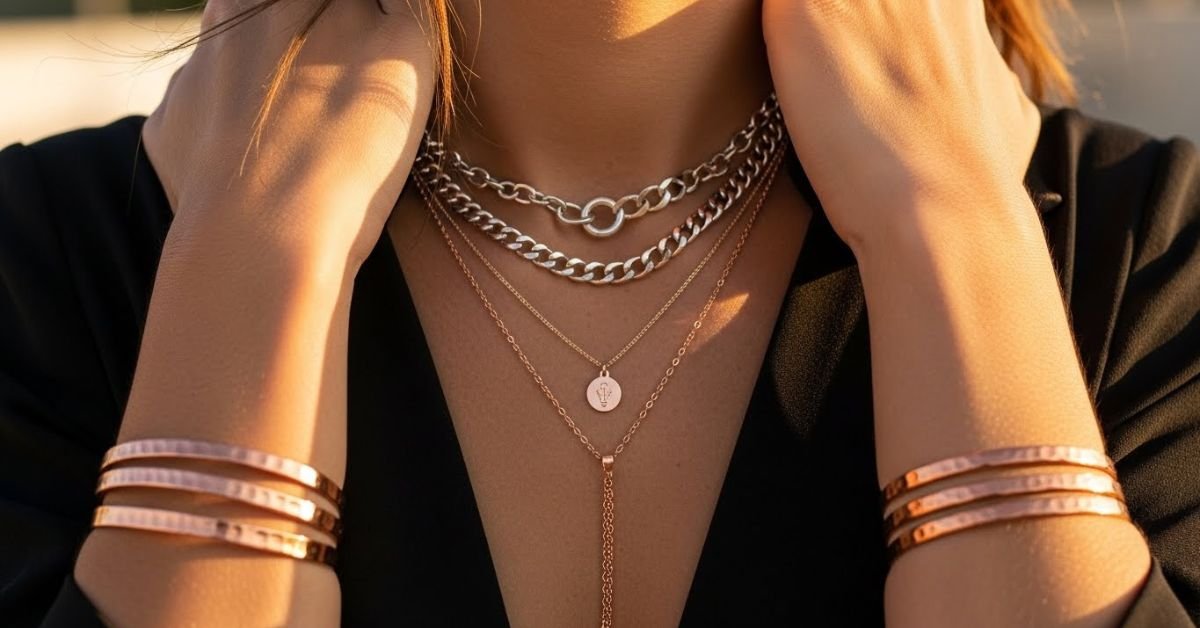
Styling metal jewelry involves balancing different tones so that they complement each other comfortably. You can layer pieces of varying lengths and mix different metal textures to create depth. Here is some more information on how to style mixed metals jewelry for a unique look:
Contents
Balancing Tones
Balancing tones involves having one dominant metal, such as sterling silver, and incorporating other tones, like yellow gold, as accents. The strategic application of visual weight and contrast helps create a unique look by balancing each other. It can also make a harmonious yet dynamic contrast, giving the overall look a well-composed finish.
The interplay of yellow gold and sterling silver adds visual depth and dimension to your look. By making one metal dominant and the other an accent, the overall layout establishes a clear focal point. The uniqueness stems from combining opposing colors in a balanced way, allowing individual pieces to complement each other.
Layering Pieces
You can style mixed metals jewelry by layering pieces of varying lengths and thicknesses. This technique involves combining pieces with different proportions to create depth, such as pairing a chunky gold chain with a silver pendant necklace. When layering necklaces, you could combine variations ranging from chokers and mid-length to long chains. Starting with a shorter chain and adding progressively longer pieces prevents tangling and improves the visibility of each piece.
You might pair delicate pieces with chunkier ones to create contrast. Layering a dainty silver chain with a medium-width gold necklace enhances the difference in proportion. For rings and bracelets, stack pieces in different metals and vary their widths. Alternate the metals across your fingers or wrists for a balanced look.
Juxtaposing Textures
Juxtaposing textures creates a unique look by adding depth and dimension to the jewelry ensemble. Combining surface qualities such as smooth, polished metal with a chain-link or brushed texture can help prevent the look from appearing flat. The contrast between smooth and rough textures often helps create a dynamic visual experience, adding varied quality to the jewelry. By mixing finishes, you can avoid the monotony of a uniform look; the texture difference creates a varied composition. The differences may be more striking when placed side by side. A smooth gold bracelet can stand out when paired with a rugged silver chain, highlighting the unique qualities of each piece.
Integrating Mixed Jewelry
For unique styling, incorporate pieces that already integrate mixed metals. This approach provides a cohesive starting point for ensemble construction. A jewelry piece made of mixed metals offers the following:
- Built-in balance
- Coordination support
- Foundation piece
Pieces like a pendant featuring gold and silver elements, or a two-tone watch, bridge the gap between different hues. Using jewelry that combines metals acts as a unifying element, making it easier to add other single-metal accessories. You can add pieces such as a yellow gold bracelet or a sterling silver earring without the look appearing chaotic. As a foundation piece, the integrated jewelry serves as an anchor around which you can layer the rest.
Adding Unifying Elements
Unifying elements help to create a unique mixed metal style. They can function as a deliberate design choice that enhances the jewelry’s aesthetic. These elements bring both colors together in one place, creating a focal point that structures the rest of the jewelry arrangement. This helps mixed metals achieve harmony through contrast, preventing the rest of the ensemble from appearing disconnected. Using an integrated piece provides a versatile foundation that ties all other jewelry elements together.
Explore Mixed Metals Jewelry
The strategic use of metal repetition across your jewelry pieces helps create a cohesive, unique look. This involves repeating each metal used at least once on other jewelry pieces on the rest of your body. Contact a reputable jewelry store to learn more about what they offer.
